Sea-Doo Cranks But Won't Start? The Real-World Fixes, In Order
Share
The starter spins the engine over strong, but it just won't catch. Here's the logic that saves you money: if it's cranking, your battery and starter work — so the engine is only missing one of three things: spark, fuel, or the OK from the ignition/security system. The trap most people fall into is buying an expensive part when the real problem is a corroded connector or a tank of bad gas. Below: the shared checks first, then the fixes split by engine — skip straight to your type.
Start with these — any Sea-Doo
- Charge or load-test the battery. A battery strong enough to crank can still be too weak to fire the coils or run the fuel pump — you'll sometimes get a click instead of a crank. Charge it fully and clean/tighten both terminals and the ground strap.
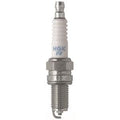
- Do the spark-vs-fuel test. Pull a plug and check for spark: ground the plug threads against bare metal, crank, and look for a fat blue spark. No spark or weak yellow spark = work the ignition side. Good spark = work the fuel side. This one move tells you which half of the ski you're fighting.
Read the plug you just pulled (works on any Sea-Doo)
That plug is a free diagnostic gauge — the tip tells you what's going on in the cylinder:
| What the plug looks like | What it's telling you |
|---|---|
| Light tan / gray, dry | Healthy — spark and mixture are fine, look elsewhere |
| Wet with fuel, smells of gas | Getting fuel but not lighting it → no/weak spark, or flooded |
| Black, dry, sooty/fluffy | Running rich, weak spark, or carbon-fouled → clean/replace and find the rich cause |
| Black, wet, oily | Oil fouling — too much 2-stroke oil, worn rings, or flooding |
| Bone dry, clean | Not getting fuel at all → work the fuel side |
| White/glazed, blistered, eroded electrode | Running lean or overheating (air leak, low fuel, wrong plug) — dangerous, find the lean cause before running it |
Check the gap against your spec while it's out, and honestly — plugs are cheap. If they're fouled, worn, or you're not sure how old they are, just put in fresh plugs as your first move. A fouled plug alone will keep a ski from starting.
Check the fuel — pull a sample (any Sea-Doo)
Old or watered fuel is one of the most common no-starts, and it hides. Don't guess — pull a sample and look at it:
- Relieve fuel pressure (4-TEC) or shut the fuel valve (2-stroke), then crack the line at the fuel filter or pump inlet and catch a few ounces in a clear glass jar. (You can also siphon from the bottom of the tank, where water settles.)
- What good fuel looks like: bright, clear, one uniform color, and it smells like gasoline.
- Water in the fuel: a separate clear layer sitting at the bottom of the jar, or a cloudy/milky look. This is ethanol phase separation — the water won't burn and it sits right where the pickup draws from. Extremely common in a ski that sat.
- Stale fuel: dark amber/brown color and a sour, varnish, or turpentine smell instead of gas.
- Debris: rust flakes or sediment = a dirty tank or rotting lines.
If the sample is bad: drain the tank completely, replace the fuel filter, and refill with fresh fuel and stabilizer. Then check your fuel cap seal and tank vent — that's usually how the water got in.
4-Stroke Sea-Doo (4-TEC, fuel-injected — 2002 and newer)
First free check on any 4-TEC: clean the DESS post & key. Green or white crust on those pins is one of the most common no-starts there is, because the ski won't authorize. Clean the post and the underside of the key with a pencil eraser or contact cleaner, reseat, and retry. Still dead? Try a known-good key.
4-TEC — no spark
Two things to know before you spend money. First, a 'dead MPEM' is very often just corroded connectors — the module sits in a bad spot and its plugs corrode, especially in salt water. Unplug, clean the pins, add dielectric grease, and retest first. Second, to test an ignition coil: swap the suspect coil onto a known-good cylinder — if the dead spark follows the coil, the coil is bad; if it stays put, it's the plug or wiring. You can also ohm the coil's primary and secondary windings against spec.
| Check | Likely cause | Fix |
|---|---|---|
| No beeps at all when the key goes on | DESS / MPEM not seeing the key | Clean the DESS post and MPEM connectors first; if still dead, the MPEM needs a dealer/BUDS scan |
| Fouled, oil-soaked, or worn plugs | Bad spark plugs | Fresh spark plugs — cheap, always start here |
| Dead spark follows the coil when you swap cylinders | Failed ignition coil | Ignition coil (1503 4-TEC) |
| Charging voltage jumping past ~14.7V | Over-volting regulator | Stop running it — it can fry the MPEM. Replace the voltage regulator/rectifier |
4-TEC — has spark, no fuel
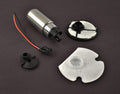
The money-saver most people miss: if you attach the key and don't hear the fuel pump buzz for ~2 seconds, don't assume the pump is dead. On 4-TEC skis the fuel pump gets its ground through the ECM's 40-pin connector — when that connector corrodes, the pump never primes. Unplug the 40-pin ECM connector, clean it with contact cleaner (DeoxIT), reseat it, and a huge share of 'dead pump' skis prime right up and start. Do that before buying a pump.
On the injectors: a clogged injector makes a cylinder run lean, misfire, and hard-start; a leaky injector floods its cylinder and makes fuel pressure bleed down after the pump shuts off (hard hot-starts, black plug on that hole). A leak-down test tells them apart: pressure should hold near 58–60 PSI for a few minutes — a fast drop points to a leaky injector, a bad regulator, or a pump check valve. Injectors can sometimes be professionally ultrasonic-cleaned and flow-tested, but if they're leaking or won't clean up, replace them.
| Check | Likely cause | Fix |
|---|---|---|
| No ~2-second pump buzz when the key goes on | Corroded pump ground at the ECM connector (or a truly dead pump) | Clean the ECM 40-pin connector first, then the fuel pump (900/1503/1630 08–26) · fuel pump (1503 03–12) |
| Pump runs but pressure is low or bleeds down (spec ~58–60 PSI) | Weak pump, bad fuel pressure regulator, or a leaky injector | Fuel pump above, a fuel pressure regulator, or clean/replace fuel injectors (155–510HP 09–17) · injectors (130–310HP 02–11) |
| One cylinder weak / lean misfire; hard start | Clogged injector on that cylinder | Ultrasonic-clean & flow-test the injector, or replace it |
| Clicks instead of cranking, or drops out | Low fuel pressure or low battery voltage (safety cutoff) | Confirm battery voltage and fuel pressure — the MPEM won't let it start if either is out of range |
2-Stroke Sea-Doo (carbureted — older skis)
First free check: make sure the tether/lanyard cap is fully seated on the stop switch. Then work spark or fuel based on your plug test.
2-stroke — no spark
Same rule as the 4-TEC: most 'dead MPEM' 2-strokes are actually corroded connectors, and the MPEM sits in a spot that loves to corrode in salt water. Clean the pins and add dielectric grease before you spend a dime — confirm a genuinely bad MPEM by swapping it into a known-good ski. Also check the plug caps: they thread onto the wire and their resistance drifts or the wire corrodes, killing spark. Unscrew, trim back fresh wire, and reinstall.
| Check | Likely cause | Fix |
|---|---|---|
| No spark, corroded connectors near the module (salt-water skis) | Connection fault mimicking a dead module | Clean pins + dielectric grease first; confirm a bad MPEM by swapping into a known-good ski |
| Fouled/worn plugs or cracked, high-resistance plug caps | Bad plugs or caps | Fresh plugs & caps |
| No spark and no power anywhere | Stator (only affects spark when there's no power at all) | Test stator output; the rectifier only affects spark if it's over-volting |
2-stroke — has spark, no fuel
Know this trap if your ski is pre-2001: the factory gray Tempo fuel lines rot from the inside out. The crumbs travel downstream and plug the tiny internal filter inside the Mikuni carburetor. The tell-tale sign is a ski that starts and idles on the trailer but bogs down under load — and eventually won't start at all. A carb kit alone won't fix it if the lines are still shedding debris.
The proper fix, in order:
- Replace ALL the fuel lines with ethanol-rated line (don't reuse the gray stuff). Keep supply and return straight — don't swap them.
- Clean or replace the fuel selector valve (the ON/OFF/RESERVE knob) — they clog and can draw air.
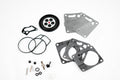
- Rebuild the carburetors, including the small internal filter screens, with a fresh kit.
One more 2-stroke gotcha: every fuel joint has to seal. A cracked line, a loose clamp, or a leaking crankshaft seal lets the engine draw air, run lean, and become a miserable hard-starter. If it starts but won't idle after a rebuild, pressure-test the crank seals.
| Check | Likely cause | Fix |
|---|---|---|
| Sat with old fuel; hard start; bogs under load; runs fine on trailer | Gummed carb + clogged internal filter from rotting gray fuel lines | Replace all fuel lines + carb rebuild kit (universal Mikuni SBN), clean internal filters |
| Starts but won't idle / runs lean after a carb job | Air leak — cracked line, loose clamp, or bad crank seal | Reseal every joint; pressure-test and replace crank seals — browse fuel system parts |
Both spark and fuel, and it STILL won't run? (either engine)
- Flooded. Plugs soaked. Hold the throttle wide open (adds no fuel) and crank to clear it, or dry/replace the plugs.
- Low compression. A high-hours 2-stroke with worn rings or a scored cylinder will crank fast but never fire. Run a compression test before chasing fuel and spark in circles — this is the check that ends the guesswork.
- Water in a cylinder (hydrolock). A bad flush or a tip-over pushes water into a cylinder. Pull the plugs and crank to blow it out before it fires — running it wet bends rods.
- A code is stored (4-TEC). If your gauge is throwing a P-code, look it up first — see our Sea-Doo fault code guide.
The short version
Pull a plug — it tells you spark-or-fuel and shows you rich, lean, or oil-fouled in one look. Pull a fuel sample and check for water. 4-TEC: clean the DESS post, then clean the ECM connector before buying a pump; swap-test coils; leak-test for a bad injector. 2-stroke: on an older ski, assume the gray fuel lines and rebuild the fuel system as a set; clean connectors before condemning an MPEM. Ninety percent of no-starts are hiding in that list.
Get the parts for your ski
Match to your exact year and model on the collection pages:
Related guides
Always work cheapest-to-most-expensive: read the plug, check the fuel, and clean connections before you buy a pump, injectors, or a module.