Sea-Doo Check Engine Light: How to Read Fault Codes and What to Do Next
Share
Nothing kills the mood on the water faster than a check engine light. But before you trailer up and head to the dealer, take a breath — a lot of Sea-Doo check engine faults are things you can diagnose and fix yourself. This guide walks through exactly how to read what your ski is telling you, what the most common codes mean, and what to do about them.
First: Understand What Your Sea-Doo Is Trying to Tell You
Modern 4-TEC Sea-Doos (2002 and newer) communicate faults in three ways, and it's important to know the difference between them:
- Beep codes: Audible patterns from the ski's alarm. Different beep patterns mean different severity levels.
- Fault messages: Plain-English text displayed on your gauge cluster screen (e.g., "CHECK ENGINE", "LOW OIL PRESSURE"). These tell you the category of problem but not the specific cause.
- Error/fault codes: Alphanumeric codes (like P0089 or C0042) that identify the exact malfunction. These require a diagnostic tool or scrolling through the gauge cluster to read.
Most riders only see the fault message and assume they need a dealer. In many cases, the gauge cluster will tell you a lot more if you know how to navigate it.
Step 1: Listen to the Beep Code
When something goes wrong, your Sea-Doo will beep. The pattern tells you how serious it is:
- One long beep at startup: D.E.S.S. key issue. Check that the lanyard is properly seated on the post. If the tether cord has been wet with salt water, clean the cap. If it's the wrong key for the ski, that's a programming issue.
- 2-second beep every 15 minutes: Engine management system fault or iBR fault. The ski can often still be ridden, but needs attention. Also triggers if the ski has been tipped upside down.
- 2-second beep every 5 minutes: Low fuel warning or fuel sensor fault. Check the tank first before assuming a sensor problem.
- Continuous beeping: Stop riding immediately. This indicates a critical fault — typically overheating (high engine or exhaust temperature) or low oil pressure. Shut the engine off, let it cool, and do not restart until you've identified the cause.
Step 2: Read the Fault Message on the Gauge Cluster
Once you hear a beep code, look at your gauge cluster screen. On 4-TEC Sea-Doos, a fault message will appear in the display area that normally shows riding mode (Sport, Touring, etc.). Common messages and what they mean:
| Message | What It Means | What to Do |
|---|---|---|
| CHECK ENGINE | Engine system fault detected by ECU | Read the fault code (see Step 3). Don't ignore it. |
| LOW OIL PRESSURE | Oil pressure dropped below safe threshold | Shut off immediately. Check oil level. Do not ride. |
| HI ENGINE TEMPERATURE | Engine coolant temperature too high | Shut off. Check cooling system and flush line. |
| HI EXHAUST TEMPERATURE | Exhaust overheating | Shut off immediately. May indicate a blockage. |
| LIMP HOME MODE | Major fault, engine power limited by ECU | Ride back to dock at reduced speed. Do not push it. |
| IBR MODULE ERROR | Intelligent Brake & Reverse system fault | Read the fault code. Often a sensor or wiring issue. |
| LOW BATTERY VOLTAGE | Battery voltage dropping below threshold | Check battery charge and connections — see charging system diagnosis. |
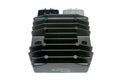
| HIGH BATTERY VOLTAGE | Charging system producing too much voltage | Check the regulator/rectifier. |
| MAINTENANCE REQUIRED | Scheduled service interval reached | Service the ski. Can be reset after service. |
| FUEL SENSOR DEFECTIVE | Fuel level sensor fault | Verify fuel level manually. Sensor may need replacement. |
Step 3: Pull the Fault Code from the Gauge Cluster
Here's what most Sea-Doo owners don't know: you don't always need a diagnostic tool to read error codes. Your gauge cluster has a built-in fault code screen. Here's how to access it:
- With the ski on (engine running or key in), press the MODE button repeatedly to cycle through the gauge screens.
- Keep pressing MODE until you see a Fault Codes screen or a code displayed in the gauge area.
- Once on the fault code screen, press SET to enter it.
- Use the UP/DOWN arrow buttons to scroll through any stored or active fault codes.
- If the display shows NO ACTIVE FAULT CODES, no current faults are stored in the ECU.
- Press MODE or SET to exit when done.
Note: The exact button sequence varies slightly by model year and gauge type. On older iTC gauges the layout is slightly different but the MODE/SET navigation is consistent. Refer to your operator's guide if you can't locate the fault code screen.
Write down any codes you find. Even if you clear them, having the code number lets you research the exact fault.
Step 4: For Full Diagnostics, Use BUDS or CanDooPro
The gauge cluster gives you the code numbers, but for a full diagnostic picture — including fault history, sensor readings, and the ability to clear codes — you need diagnostic software. There are two main options:
- B.U.D.S. (BRP Utility & Diagnostic Software): BRP's official tool. Requires a proprietary cable and dealer-level access. Most independent owners won't have this, but any authorized Sea-Doo dealer does.
- CanDooPro: A popular third-party alternative that works with most 4-TEC Sea-Doos. Much more accessible for DIY owners — the cable and software can be purchased without dealer credentials. Shows active faults, stored fault history, live sensor data, and allows code clearing.
If your fault code points to a sensor issue or you want to verify a repair cleared the code, CanDooPro is worth the investment if you plan to do your own service long-term.
Most Common Sea-Doo Fault Codes and What They Mean
Here are the codes Sea-Doo owners encounter most frequently:
P codes (Engine/Powertrain)
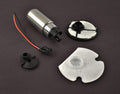
- P0089: Fuel pressure regulator performance. Often a failing fuel pump or dirty fuel injector.
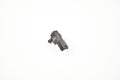
- P0107 / P0108: MAP (manifold absolute pressure) sensor circuit fault. Check the sensor connector and wiring first before replacing the sensor.
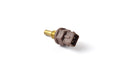
- P0116 / P0117 / P0118: Engine coolant temperature sensor range fault. Can cause rough running or limp mode. Check the sensor and its wiring harness.
- P0261 / P0264 / P0267: Fuel injector circuit fault (cylinders 1, 2, 3). Check connectors before replacing injectors.
- P0562: System voltage low. Points to a weak battery or charging system issue — see charging system diagnosis.
- P1630: Throttle position sensor fault. Common on higher-mileage skis.
C codes (iBR / Chassis)
- C0042 / C0043: iBR sensor fault. Often caused by debris or sand jamming the iBR bucket, or a damaged sensor/wiring connector. Check the iBR bucket for physical obstruction first — this is the most common cause.
- C0044: iBR actuator motor fault. If clearing the obstruction doesn't fix it, the actuator may need service.
→ Full code lookup: This is a starter list. See our complete Sea-Doo 4-TEC fault code list — every common P-code matched to the exact sensor, coil, injector, or pump to fix it, plus the supercharged intercooler-to-throttle-body (P1614) trap.
The First Thing to Try: The 3-Minute Reset
Before diving into diagnostics, try this: remove the D.E.S.S. key (tether lanyard) from the post and wait 3 full minutes before reinstalling and restarting. This performs a soft reset of the ECU. Transient faults — often caused by a temporary sensor glitch, low voltage at startup, or a brief communication error — will often clear on their own this way. If the code comes back after the reset, it's a real fault that needs to be addressed.
When to DIY vs. When to See a Dealer
Most fault codes fall into one of two buckets:
- DIY-friendly: Sensor connector faults, low voltage, D.E.S.S. key issues, iBR debris obstruction, fuel sensor faults, maintenance reminders. These are usually wiring, connection, or basic service issues you can address yourself.
- Dealer territory: Low oil pressure (engine internal issue), continuous overheating after flushing, limp mode faults you can't clear, ECU/MPEM faults, compression-related codes. These require deeper diagnostics and potentially internal engine work.
A check engine light is not automatically a dealer visit. Read the code first, and most of the time you'll find it's something you can handle.
Bottom Line
Your Sea-Doo's fault code system is genuinely useful — it's telling you something specific, not just "go to the dealer." Learn to read the beep pattern, pull the fault message off the dash, and navigate to the fault code screen, and you'll be able to diagnose most issues in the driveway. For electrical components and sensors your ski needs, browse our electrical parts section or contact us for help identifying the right part for your fault code.