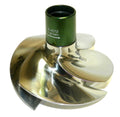
Sea-Doo Loses Top Speed but Revs Fine? It's Almost Always the Wear Ring
Share
Your Sea-Doo used to hit 55–60 mph. Now you pin the throttle, the engine revs up like normal — maybe even higher than normal — but the ski just won't hook up and go. Weak hole-shot, sluggish, tops out way low. Nine times out of ten this isn't an engine problem at all. It's your jet pump slipping, and it's usually a cheap fix.
What's actually happening: cavitation
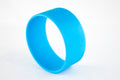
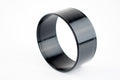
Your pump makes thrust by spinning an impeller inside a tight plastic wear ring. The gap between the impeller blades and that ring is supposed to be almost nothing — factory spec is about 0 to 0.4 mm (.000–.016'), and the wear limit is only 1.0 mm (.040'). When that ring wears or the impeller gets chewed up, water slips back around the blades instead of being blasted out the nozzle. That slip is cavitation — the engine spins freely but you lose a huge chunk of thrust. A gap the thickness of a nickel is enough to cost you serious speed.
First: is it the pump or the engine?
This one check tells you which way to go — don't skip it:
- Engine revs the SAME or HIGHER than normal, but no speed → the pump is slipping. Keep reading — this is a wear ring / impeller job.
- Engine revs LOWER than normal and feels flat → that's the engine not making power (fouled plugs, fuel delivery, clogged exhaust/carbon, or on a supercharged ski, a tired supercharger). Different problem — start with a compression and fuel check.
The 2-minute driveway test
With the ski safe on the trailer, engine off:
- Clear the intake first (free fix). Look up into the intake grate on the bottom of the hull and into the pump. Weeds, fishing line, a stick, or packed sand will wreck your thrust and cost you nothing to pull out. Rule this out before spending a dime.
- Flashlight the pump. Shine a light into the jet nozzle from the back. Look at the gap between the impeller blade tips and the wear ring, and spin the impeller by hand.
- What you're looking for: a visible gap you could slide a business card into, deep gouges or scoring in the plastic ring, or dinged/rolled-over impeller blade edges (sand and gravel do this). Any of those = your problem.
- Grab the impeller and try to spin it on the shaft. If it spins independently or the engine suddenly revs to the moon with zero thrust on the water, the rubber impeller hub has spun — the impeller is no longer locked to the shaft.
Symptom → cause → fix
| What you're seeing | Most likely cause | Fix |
|---|---|---|
| Revs high, tops out low, sluggish hole-shot; ring looks scored or gapped | Worn / grooved wear ring (most common) | Replace the wear ring — e.g. 215/255/260 (04–18) or GTR/GTX/RXP/RXT 230–300 (16–26) |
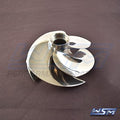
| Nicked, rolled, or bent impeller blade edges (sucked up sand/gravel/debris) | Damaged impeller | WSM OEM-style impeller to get back to stock, or step up to a SOLAS impeller for stronger bite & acceleration |
| Engine suddenly revs to redline with almost no thrust | Spun impeller hub (rubber hub let go) | Replace the impeller |
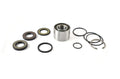
| Grinding/growling vibration along with the speed loss | Worn jet pump bearings | See the pump-bearing guide linked below — often done together with the ring/impeller |
| Weeds, line, sand, or debris packed in the intake/pump | Blocked intake (free!) | Clear it out — recheck speed before buying anything |
The honest part: do the ring and impeller together
Here's what separates a real fix from a repeat job: the wear ring and impeller wear as a matched pair. Drop a fresh, tight impeller into a worn-out ring and you'll still cavitate. Put an old, dinged impeller inside a brand-new ring and you'll chew the new ring right up. If both show wear, replace both and set the clearance to spec — that's how you get your speed and keep it. A ring is cheap (around $55); doing the job twice is not.
The wear ring is almost always the first and cheapest thing to try, so start there if you're not sure. If your blades are clean and the ring is scored, a ring alone may bring the speed right back.
Get the parts for your ski
Two ways to go on the impeller: a WSM impeller is a direct OEM-style replacement that puts you right back to factory performance for less money, while a SOLAS impeller is re-pitched for stronger acceleration and hook-up. Both are direct fits — pick based on whether you want stock or a little more punch. Match to your exact year and model on the collection pages, since pump parts are model-specific:
Related guides
The same cavitation principle applies to Yamaha and Kawasaki axial-flow pumps — the parts and clearances differ, but 'revs high, no speed' points to the pump on any PWC.