Why Won't My Yamaha Jet Ski Start? A Step-by-Step Diagnostic Guide
Share
Why Won't My Yamaha Jet Ski Start? A Step-by-Step Diagnostic Guide
You're at the dock, gear on, water's glassy — and your Yamaha WaveRunner won't fire up. Before you panic or start throwing parts at it, take a breath. Most no-start issues on Yamaha jet skis come down to a handful of root causes, and you can trace them in a logical order without special tools. This guide walks you through exactly why your Yamaha jet ski won't start and how to fix it fast.
If you're on a Sea-Doo or a Kawasaki, the diagnostic order is the same but the details differ — see our general guide to why a jet ski won't start for the cross-brand version.
Start Here: The Pre-Check Basics
Before diving into electrical or mechanical diagnosis, cover the basics. You'd be surprised how many no-start calls get solved in the first two minutes.
Check the fuel level. Yamaha's fuel gauges can read inaccurately when the craft is on a trailer at an angle. Fill the tank if there's any doubt.
Check the DESS lanyard. Yamaha uses a magnetic security lanyard on all modern WaveRunners. The engine will not crank without the lanyard seated on the post. Make sure it clicks into place and the unit beeps to acknowledge it. A damaged chip in the lanyard or a corroded post will prevent starting just as reliably as a dead battery.
Check for fault codes. Post-2012 Yamahas with digital displays will show fault codes when you turn the key. Note any codes before you proceed — they'll point you directly toward the failing system.
Why Won't My Yamaha Jet Ski Start? The Most Common Causes
If the basics check out, work through these in order. These are the most frequent culprits across WaveRunner platforms from the EX and VX series up through the FX and GP models.
1. Dead or Weak Battery
The single most common reason a Yamaha jet ski won't crank is a discharged battery. Yamaha's TR-1 and MR-1 engines use a starter motor that draws significant current. A battery that's a year or two old — or one that sat over winter without a maintainer — often doesn't have enough reserve to spin the starter.
Test it: Turn the key and listen. A single click or rapid clicking means low voltage. No click at all usually means the battery is completely dead or there's a blown fuse.
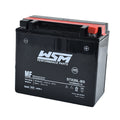
Fix it: Charge with a quality marine charger and retest. Voltage should read 12.6V or higher at rest and shouldn't drop below 10.5V under cranking load. If it won't hold a charge, replace it. Most WaveRunners take a Group 30 or equivalent sealed AGM battery.
Check the terminals too. Corroded battery terminals produce the same symptoms as a dead battery. Clean with a wire brush and reconnect snug.
2. Blown Fuse or Tripped Circuit Breaker
Yamaha WaveRunners have a fuse block typically located under the front hood near the battery. A blown fuse in the main circuit, starter circuit, or ECU feed will prevent the engine from starting entirely.
Pull each fuse and inspect it visually, or use a test light to check continuity. Replace any blown fuse with the exact same amperage — never upsize. If a fuse keeps blowing, there's an underlying short to chase down.
Some models also have a thermal circuit breaker that can be reset once cooled. If it tripped due to an overload, wait a few minutes and reset it manually before retesting.
3. Fuel Delivery Problems
If the engine cranks but won't fire, fuel delivery is the next stop.
Old or degraded fuel is the most common post-storage culprit. Ethanol-blended pump gas absorbs moisture and begins to degrade in as little as 30 days. If your ski sat with fuel in it, drain the tank and refill with fresh gas before anything else.
Clogged fuel filter restricts flow enough to prevent a cold start. On most WaveRunners, the inline fuel filter is inexpensive and takes minutes to swap.
Shop Yamaha WaveRunner fuel filters and fuel system parts →
Weak or failed fuel pump — Yamaha's high-pressure EFI pumps can wear out after years of use, especially if the ski was run repeatedly with low fuel (the fuel itself cools and lubricates the pump). A weak pump won't deliver adequate pressure to start. Check fuel pressure against your service manual spec if you have a gauge.
4. Ignition and Spark Issues
No spark means no combustion. On carbureted older Yamahas — XL, GP, and SJ series — the igniter and spark plugs are the first stops. On modern EFI models, the coils and ECU are more relevant.
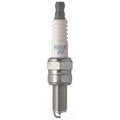
Spark plugs should be inspected at every service interval, typically 50 hours or annually. Pull them, check the electrode gap, and look for fouling: black soot indicates a rich condition or oil consumption; white or chalky deposits indicate a lean condition or overheating. Replace them if there's any doubt — plugs are cheap insurance.
Shop Yamaha WaveRunner spark plugs →
Ignition coils on VX and FX models occasionally fail on high-hour engines. A coil tester or a swap with a known-good unit will confirm quickly.
Throttle position sensor (TPS) faults can confuse the ECU on EFI models to the point where it blocks starting entirely. If you have a TPS fault code logged, that's your diagnostic path.
5. Starter Motor or Solenoid Failure
If you hear nothing when you press the start button — no click, no crank — and the battery tests good, suspect the starter solenoid or the starter motor itself.
Test the solenoid: Use a jumper wire to bridge the large terminals on the solenoid directly. If the starter spins, the solenoid is bad. If nothing happens, the starter motor has failed. Yamaha starter motors are accessible from the front of the engine block and can be replaced without pulling the engine.
6. Hydrolocked Engine
If the ski tipped over, was stored nose-down, or sat in heavy rain with an unsealed intake, water may have entered the cylinder through the exhaust or air intake. A hydrolocked engine will either not crank at all or will turn over with heavy, labored resistance.
Do not force crank it. Remove the spark plugs, crank the engine briefly with the plugs out to expel water, dry the cylinders thoroughly, reinstall the plugs, and retry. If water sat in the cylinder for any significant time, pull the dipstick and check the oil. A milky or tan color means water got into the crankcase and the engine needs a full inspection before you start it.
7. Low Compression or Mechanical Wear
On high-hour machines, don't overlook mechanical causes:
- Seized engine from oil starvation or severe overheating: won't crank or turns with extreme resistance.
- Sticking valves on 4-stroke TR-1 and MR-1 engines: engine cranks normally but won't fire.
- Low compression from worn rings or valve seats: quick to confirm with a compression gauge. Compare readings against your service manual spec.
Why Won't My Yamaha Jet Ski Start After Winter Storage?
Post-storage no-starts follow a predictable pattern: dead battery, stale fuel, and gummed injectors or carburetor jets. If your ski sat for more than 60 days without being run, work through this sequence before anything else:
- Fully charge or replace the battery.
- Drain the fuel tank and refill with fresh gas.
- Add a fuel system cleaner (Sea Foam or equivalent) and run it through before attempting a cold start.
- On carbureted models, pull and clean the carb jets — they will be partially or fully blocked after a long sit.
This three-step approach resolves the majority of storage-related no-starts without any further diagnosis needed.
FAQ
Q: My Yamaha WaveRunner clicks but won't crank — what does that mean? A: A single heavy click usually means the starter solenoid is engaging but battery voltage is too low to spin the starter. Rapid clicking is a classic sign of a low or dead battery. Charge or replace the battery first before diagnosing anything else.
Q: Why won't my Yamaha jet ski start when it's hot? A: Hot-start problems are often caused by a fuel pump that loses pressure when heat-soaked, vapor lock in the fuel line, or a coolant temperature sensor feeding bad data to the ECU. Let the ski cool for 10–15 minutes and retry. If it starts cold consistently but not hot, check fuel pressure and the coolant temp sensor output.
Q: Can a damaged DESS lanyard prevent my WaveRunner from starting? A: Yes. If the lanyard's magnetic chip has failed or the post on the ski is corroded or damaged, the ECU will not permit the engine to start. Test with a spare lanyard if you have one. A dealer can also read DESS system status with a diagnostic tool.
Q: Should I use premium fuel in my Yamaha WaveRunner? A: Most Yamaha WaveRunners are tuned for 87 octane regular unleaded. Using premium won't hurt but offers no benefit on stock engines. What matters more is fuel freshness — use fuel less than 30 days old and avoid high-ethanol blends (E15 or higher) which can damage fuel system components not rated for them.
Get Back on the Water
Most Yamaha no-start problems are fixable with the right parts and a methodical approach. Whether you need a replacement battery, fuel filter, spark plugs, ignition coil, or a new starter motor, find the correct part for your specific WaveRunner model at Everything JetSki. Search by model or part number — we stock Yamaha OEM-spec components and quality aftermarket alternatives so you get the right fit the first time and get back on the water fast.