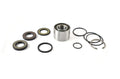
Water in Your Sea-Doo Hull? It's Usually the Carbon Seal — and What Killed It
Share
You pop the seat and there's water sloshing in the hull. On a Sea-Doo, the number-one source is the carbon seal — the seal where the driveshaft passes through the hull into the pump. But here's the part most shops skip telling you: the carbon seal almost never just 'wears out' on its own. Something kills it — a bad motor mount, a failing pump bearing, or running the ski dry. Replace the seal without fixing the cause and you'll be bailing again by next month. This guide covers both.
What the carbon seal is (and why it leaks)
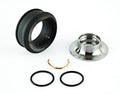
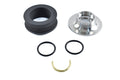
Where your driveshaft exits the back of the hull, a spring-loaded rubber bellows (boot) presses a carbon ring tight against a polished metal ring on the shaft. That carbon-against-metal face is what keeps the ocean out of your hull. It's a wear part — under good conditions a carbon ring lasts roughly 100–150 hours. When the carbon wears down, the boot tears, or the shaft gets pushed out of position, the seal opens and water comes in.
(Good news for newer owners: Sea-Doo improved the seal in 2020 and revised the driveshaft/bellows/circlip in 2021, which dramatically cut failures on later skis.)
Signs it's the carbon seal
- Water in the bilge that isn't from rain or your flush.
- Black carbon dust or soot smeared on the hull around the driveshaft/seal area — that's the ring grinding itself away.
- Cavitation on takeoff — high RPM but slow to plane. A worn seal sucks air into the pump. (If that's your main symptom, also read our lost-top-speed guide.)
- More water after hard use, or a slow seep while it sits on the lift.
Free check: pull the seat, wipe the bilge dry, go for a short ride, and look again. Water pooling at the back near the driveshaft tunnel — with black dust around it — points straight at the carbon seal.
The important part: what killed the seal
This is where you save yourself a second repair. A carbon seal that failed early almost always has a root cause — find it before you close the hull back up.
1. Running it out of the water too long (free fix — just stop doing it)
The carbon ring is only cooled by water. Idle on the trailer or run a dry flush too long and the ring overheats and cooks itself — Sea-Doo says no more than 90 seconds out of the water. This is the most common abuse cause, and it costs nothing to avoid.
2. Worn or broken motor mounts (misalignment)
If the rubber motor mounts sag or crack, the engine shifts and the driveshaft no longer lines up straight with the pump. That misalignment grinds the carbon seal — and the driveshaft splines — unevenly, adds vibration, and causes cavitation. The tell is uneven carbon seal wear. Check by trying to rock the engine or moving the exhaust side to side — real movement means a bad mount. And if the engine was ever pulled and reinstalled, it must be re-aligned, or the new seal dies fast.
3. Failing jet pump bearings
This is the sneaky one. As the pump bearings wear out, the driveshaft loses its support and starts to wander — and as it deteriorates, the shaft gets thrust forward into the engine and pushes the carbon seal open, letting water in. Watch for a metal-to-metal growl when you get on plane, noticeable fore-aft play in the driveshaft (a worn pump can show ~1/4'), or water/grease weeping from the pump's oil plug. If the bearings are going, do the carbon seal and the pump together. (See our jet pump bearing guide.)
4. A torn or hardened bellows boot
The rubber boot that holds the ring tight gets brittle and cracks with age. A boot that can't apply spring pressure won't seal no matter how good the carbon ring is — which is exactly why the full repair kit includes the boot, not just the ring.
Symptom → root cause → fix
| What you're seeing | Root cause | Fix |
|---|---|---|
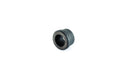
| Water in hull + black dust at the driveshaft; seal is worn | Carbon ring worn out (age/hours or ran it dry) | Carbon ring kit (4-TEC 04–17, incl. boot) · carbon ring (2-stroke 95–07) |
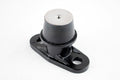
| Uneven seal wear, vibration, engine rocks/shifts | Worn or broken motor mounts / misalignment | Replace the motor mounts (e.g. Sea-Doo 4-TEC 02–17) and re-align the engine, then a new carbon seal |
| Metal growl on plane, driveshaft play, grease/water at pump oil plug | Failing jet pump bearings pushing the shaft into the seal | Jet pump repair/bearing kit + carbon seal, done together |
| Ring looks OK but boot is cracked/hard | Torn or hardened bellows boot | Use the full carbon ring kit (ring + boot), not just the ring |
| Spline damage, chronic seal failure after an engine R&R | Worn driveshaft or never re-aligned | Inspect/replace the driveshaft and align properly |
Not the carbon seal? Other places water gets in
If the seal and driveshaft area are dry, the water is coming from somewhere else. Check:
- Loose or failed through-hull fittings and the bailer/siphon line.
- Drain plugs not seated or missing O-rings.
- Cooling hoses and clamps weeping inside the hull.
- Ride plate / pump-to-hull seal.
- Exhaust hose or water box leaking on the wet side.
The honest part
A carbon ring is cheap — often under $40. What's expensive is doing the job twice, or worse, sinking the ski when it fails on the water. So when you're in there: replace the seal, but also check the motor mounts, feel the driveshaft for play, and confirm alignment. Fix what killed the seal, not just the seal. That's the difference between a repair that lasts a season and one that lasts years.
Get the parts for your ski
Match to your exact year and model on the collection pages:
Related guides
Applies to Sea-Doo 2-stroke and 4-TEC skis (both use a carbon-ring driveshaft seal). If you ever find water in the hull on the water, get off it and check before you ride again — a failed seal can sink a ski.