Jet Ski Vibration When Accelerating: Causes, Diagnosis, and Fixes
Share
Jet Ski Vibration When Accelerating: Causes, Diagnosis, and Fixes
You're at the throttle, engine climbing through the RPMs, and instead of smooth, planted acceleration you feel it — a shudder, a buzz, or a rhythmic vibration that wasn't there last season. Jet ski vibration when accelerating is one of the most common complaints from PWC owners, and it's almost never something you should ignore. Left alone, what starts as an annoying wobble can turn into a blown impeller, a shredded wear ring, or collateral engine damage.
The good news: in the majority of cases, the fix is something a capable home mechanic can handle with the right parts and a few hours. This guide breaks down every realistic cause, how to pinpoint the source, and exactly what it takes to get back on smooth water.
Why Jet Ski Vibration When Accelerating Deserves Immediate Attention
Unlike a car where minor vibration might be tolerable for weeks, a PWC drives thrust through water — a medium that amplifies imbalance fast. A slightly bent impeller blade doesn't just shake; it creates turbulent flow that accelerates wear ring erosion, reduces pump efficiency, and hammers the bearing housing every time you ride. Catch it early, spend $50 on a wear ring. Ignore it for a season, and you may be looking at a full pump rebuild.
The vibration will usually tell you where to look based on when it occurs:
- At low RPM only — often engine mount or coupler related
- At mid-throttle — commonly cavitation or a partial obstruction
- At full throttle — classic impeller damage or wear ring failure
- Across all throttle ranges — drive shaft, coupler, or loose hardware
Common Causes of Jet Ski Vibration When Accelerating
Damaged or Worn Impeller
The impeller is the heart of your jet pump — a precision-cast stainless or aluminum rotor spinning at high RPM inside a confined housing. One strike on a rock, a submerged log, or a sand-packed wad of debris can bend a blade, nick an edge, or chip a tip. Any asymmetry creates an unbalanced rotation, and you'll feel that directly in the handlebars and footwells.
This is the single most common cause of vibration under acceleration in pump-jet watercraft. A bent blade that looks minor to the naked eye can throw the pump dramatically out of balance at 6,000+ RPM. If yours is bent or chipped, browse our replacement PWC impellers.
Debris Wrapped Around the Impeller Shaft
Seagrass, fishing line, rope, and plastic bags are the enemy. These materials don't just restrict flow — they wrap tightly around the impeller shaft, creating drag and throwing off rotational balance. Fishing line in particular winds up into dense cables that tighten under spin and can damage shaft seals.
This is the first thing to rule out because the fix is free: haul the ski out, remove the pump grate, look inside the nozzle, and clear anything wrapped around the shaft.
Worn or Scored Wear Ring
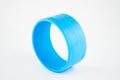
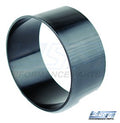
The wear ring (also called the liner or housing insert) sits between the impeller and the pump housing, maintaining a tight clearance around the impeller blades to maximize water flow and thrust. When the wear ring wears out — or when an impeller strike scores its inner surface — clearance opens up. Water recirculates around the blades instead of exiting the nozzle, and the pump surges and hunts under load.
Worn wear rings produce a specific vibration pattern: it typically emerges at mid-to-high throttle, often accompanied by a loss of top-end speed and higher-than-normal RPMs for a given pace (the engine "over-revs" because pump load has dropped). You can find wear rings by model here.
Cavitation
Cavitation happens when the impeller spins faster than water can fill the pump intake. Vapor bubbles form in the low-pressure zone behind each blade and collapse violently, creating a chattering buzz that's often mistaken for a mechanical fault. It's more common in performance machines running aggressive-pitch impellers, when riding in shallow water, or when hull intake grates are partially blocked.
Cavitation usually shows up as an RPM spike with vibration under hard acceleration — the engine revs freely but thrust doesn't match.
Engine Mount or Drive Shaft Issues
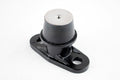
If the jet pump checks out clean, look toward the engine side. A failing engine mount allows the motor to vibrate at specific RPM bands, translating torque pulses directly into the hull — our guide to checking and replacing Sea-Doo motor mounts covers that diagnosis in detail. A bent or out-of-balance driveshaft produces a more constant vibration that worsens linearly with RPM.
Coupler wear — the rubber connector between the driveshaft and impeller shaft — is frequently overlooked, and replacement couplers cost little next to the damage a failing one does. A degraded coupler slips and chatters under load, particularly on older Sea-Doos with high hours. It's a cheap part that causes symptoms that feel expensive.
Loose Pump Hardware
A backed-off impeller nut, loose pump bolts, or a pump housing that isn't fully seated can mimic serious internal damage. Always confirm pump grate fasteners, pump assembly bolts, and impeller nut torque before pulling the pump apart.
How to Diagnose the Source of Vibration
At-Water Observations
Before hauling out, note the exact conditions when vibration occurs: RPM range, throttle position, whether it's worse turning one direction, and whether top speed is affected. This data points directly at the cause:
- Vibration + RPM spike + loss of thrust = wear ring failure or debris
- Vibration + normal RPMs + reduced top speed = impeller damage
- Vibration at idle or low RPM only = engine mount or coupler
- Intermittent vibration that clears mid-ride = temporary debris ingestion
Out-of-Water Inspection Steps
- Check the grate and pump intake. Remove the pump grate and inspect inside the nozzle for anything wrapped around the shaft. Fishing line buried deep inside the pump is easy to miss.
- Spin the impeller by hand. With the engine off, rotate the impeller through the nozzle. It should turn smoothly with no grinding, clicking, or rough spots.
- Visually inspect the impeller blades. Look for nicks, bends, chips, or leading-edge erosion. Even a small nick at the blade tip creates significant rotational imbalance.
- Feel the wear ring bore. Reach in and run a finger along the inside of the wear ring. Scoring, grooves, or visible gaps between the ring and impeller blades indicate it's time to replace it.
- Check impeller nut torque. A loose nut allows the impeller to wobble on the shaft and should be corrected before any water test.
Fixes for Jet Ski Vibration When Accelerating
Clearing Debris
Remove the pump grate (typically 4–6 bolts) and physically extract any seagrass, line, or material. Use a pick tool or needle-nose pliers for anything wound around the shaft. If fishing line was present, inspect the shaft seal carefully — compressed line can score or cut the seal lip, allowing water ingestion.
Replacing the Impeller
A damaged impeller needs to come out. You'll need a model-specific impeller wrench — impellers are left-hand threaded on most machines, so clockwise loosens them. With the impeller out, replace it with a matched OEM or SOLAS unit.
When selecting a replacement, match pitch to your riding style: stock pitch for general recreational use, a higher pitch for top-speed gains if your engine can handle the added load. Running the wrong pitch risks overloading the motor or killing off-the-line acceleration.
Replacing the Wear Ring
Wear ring replacement is a straightforward pump-out job. Once the pump is removed from the hull, the old liner typically presses or taps out. The new ring presses in with PVC cement or thread locker depending on the design. Proper clearance between the impeller and wear ring is typically 1mm or less on most machines — a properly fitted ring restores thrust and eliminates surge-type vibration immediately.
FAQ
Can I ride my jet ski if it's vibrating? Short stints to a dock or trailer ramp are usually fine, but continued riding under load accelerates wear and risks secondary damage to the pump housing and bearings. Diagnose before your next full session.
How do I tell if it's the impeller or the wear ring causing the vibration? Impeller damage causes vibration across a range of throttle positions and usually feels like a hard, rhythmic shudder. Wear ring failure tends to produce a surge or buzz specifically under load at higher RPMs, often paired with a loss of top-end thrust and an engine that over-revs for the speed you're making.
Can a bad spark plug cause jet ski vibration when accelerating? Yes. A fouled or failing plug causes a cylinder misfire, which creates a low-RPM vibration and rough idle. If the vibration is worse at low throttle and smooths out at higher RPM, check your plugs and ignition coils before pulling the pump.
How much does it cost to replace a wear ring or impeller? A wear ring typically runs $30–$80 depending on the model. A quality SOLAS replacement impeller runs $80–$200. Both are DIY-friendly repairs most riders can complete in an afternoon with basic tools and a model-specific impeller wrench.
Get the Right Parts at Everything JetSki
Whether you've traced the problem to a chipped impeller, a worn wear ring, or a coupler that's finally had enough — don't let vibration keep you docked. Everything JetSki stocks OEM-spec and SOLAS performance replacements for Sea-Doo, Yamaha, and Kawasaki machines, with fitment guides to make sure you order the right part for your hull and year the first time.
Browse impellers, wear rings, and jet pump components at everythingjetski.com and get back on the water fast.