Why Is My Yamaha Jet Ski Overheating? Causes, Fixes, and Parts to Check
Share
Why Is My Yamaha Jet Ski Overheating? Causes, Fixes, and Parts to Check
If your Yamaha jet ski is overheating, stop riding and diagnose it before you do serious engine damage. A ski that runs too hot can warp a cylinder head, blow a head gasket, or seize a piston — repairs that cost far more than the original cooling problem. The good news: most causes of a Yamaha jet ski overheating are straightforward to find and fix, even in your driveway.
This guide walks through the most common culprits, how to check each one, and which parts to replace to get your WaveRunner running cool again.
The cooling chain is laid out much the same way on every PWC, so if you're working on a Sea-Doo or a Kawasaki instead, start with our general guide to why a jet ski overheats and come back here for the Yamaha-specific parts.
How Yamaha's Cooling System Works
Before you can diagnose the problem, you need to understand how the cooling chain operates.
Most Yamaha WaveRunners use an open-loop cooling system. The engine draws raw water from the lake, river, or ocean through an intake grate on the bottom of the hull, pumps it through the engine's cooling passages, and expels it through the exhaust. Your cooling system is only as good as the water supply coming in.
Some newer and higher-displacement Yamaha models use a closed-loop (freshwater cooled) system with a sealed coolant reservoir, similar to a car. These require checking coolant level in addition to raw water flow.
In either case, the cooling chain includes:
- Intake grate — filters debris from incoming water
- Jet pump — pressurizes flow through the system
- Cooling water pump — circulates water through the engine block and head
- Thermostat — regulates operating temperature
- Cooling passages — channels water around the cylinder head and exhaust manifold
- Tell-tale outlet — confirms water is flowing during operation
A failure anywhere in that chain produces one result: your Yamaha runs hot.
Top Causes of Yamaha Jet Ski Overheating
1. Clogged Cooling Water Intake
This is the single most common reason a Yamaha WaveRunner overheats — especially in weedy, shallow, or debris-heavy water. Grass, seaweed, sand, and plastic bags are the usual suspects. The intake grate on the bottom of the hull can get partially or fully blocked, starving the engine of cooling water within minutes.
Check it: After every hot ride or overheating event, flip the ski and inspect the intake grate. Clear any debris by hand. If the grate is bent, cracked, or corroded, replace it — a damaged grate permanently restricts water flow even when it looks clear.
If debris keeps finding its way into the pump and starving the cooling pickup, an upgraded PWC intake grate is a cheap way to keep the passages clear.
2. Faulty Thermostat
The thermostat regulates when cooling water begins circulating by opening at a preset temperature. If it fails in the closed position, water can't flow and the engine overheats fast after startup. Thermostat failure is especially common on older Yamahas or on skis that sat through a winter without being properly flushed — mineral deposits and corrosion seize the valve shut.
Check it: Remove the thermostat and drop it in a pot of hot water while monitoring with a thermometer. Watch it open at the spec temperature (stamped on the housing, typically 60–71°C). If it stays shut, replace it. This is one of the cheapest cooling fixes on the ski — a new thermostat takes about 20 minutes to swap.
3. Damaged Impeller or Worn Wear Ring
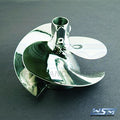
The jet pump impeller not only propels the ski but also feeds pressurized water into the cooling circuit. A damaged impeller — chipped blades from striking rocks, sand erosion, or cavitation — reduces hydraulic pressure throughout the system, including cooling water delivery.
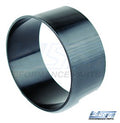
A worn wear ring causes the same problem differently: water slips back around the impeller instead of building pressure, dropping flow to the cooling circuit even at full throttle.
Check it: Remove the jet pump and inspect the impeller blades visually. Any chips, gouges, or asymmetric wear reduces efficiency. Measure wear ring clearance — Yamaha specification is typically 0.5–1.5mm. Beyond that, a new wear ring restores performance and cooling capacity.
With the pump apart, measure the clearance and replace whatever is worn — see our Yamaha WaveRunner wear rings to get the pump back to spec.
4. Blocked or Collapsed Cooling Hoses
The rubber hoses that carry cooling water through the engine degrade over time. They can collapse under suction, develop internal cracks, or kink — any of which kills water flow. This is especially common on older WaveRunners with original hoses that have never been serviced.
Check it: With the engine off and cooled down, squeeze the cooling hoses by hand. They should feel firm but flexible — not mushy, brittle, or spongy. Inspect for visible cracks, splits at the hose clamps, or sections that look pinched or deformed. Any hose that fails the squeeze test gets replaced, not monitored.
5. Failed Cooling Water Pump
Distinct from the propulsion jet pump, many Yamaha models have a dedicated cooling water pump — often driven off the driveshaft — that specifically circulates water through the engine block. If this pump's impeller wears out or the housing cracks, the engine gets no coolant regardless of how clear the intake grate is.
Check it: With the ski connected to a garden hose via a flush adapter, start the engine and check the tell-tale outlet on the hull. A healthy cooling pump produces a steady stream of water. A weak trickle or no flow at all points directly to a pump problem.
6. Mineral Scale in the Cooling Passages
If your Yamaha has been ridden primarily in salt water or hard well water and never properly flushed after each use, mineral deposits accumulate inside the cooling passages over time — like scale inside a kettle. This narrows the passages enough to cause chronic overheating even when everything else checks out.
Fix it: Run a descaling flush solution through the cooling system. In severe cases, the head must come off for manual cleaning. This is the best argument for consistent post-ride freshwater flushing — five minutes each time prevents hours of teardown later.
7. Head Gasket Failure
If you've worked through every cause above and the ski still overheats — or you're seeing white exhaust smoke, coolant in the oil, or a compression loss on one cylinder — a blown head gasket is the likely culprit. Overheating causes head gasket failure, which in turn makes overheating worse. The cycle doesn't self-correct.
Check it: Compression test all cylinders. A significantly low reading on one or more cylinders, combined with overheating symptoms, is strong evidence of a head gasket problem. This repair requires pulling the engine head — if you're not equipped for that level of work, get it to a marine tech before the damage spreads to the piston or bore.
How to Diagnose Yamaha Jet Ski Overheating: Step-by-Step
Work through this sequence before buying any parts:
- Inspect the intake grate — remove all visible debris, check for damage
- Run on a flush adapter — confirm water exits the tell-tale at a steady stream
- Squeeze-test all cooling hoses — look for soft spots, cracks, and pinched sections
- Remove and test the thermostat — hot water drop test at rated temperature
- Pull the jet pump — inspect impeller blades and measure wear ring clearance
- Compression test — rule out head gasket failure if all else checks out
Start cheap and simple. The overwhelming majority of Yamaha WaveRunner overheating problems are resolved at steps 1 through 3.
Parts to Keep on Hand
Cooling-related parts fail more often than most riders realize — they deal with constant water, heat cycling, and occasional grit. A spare thermostat, a set of hose clamps, and a fresh wear ring in the garage means you're fixing the ski the same weekend you find the problem, not waiting on shipping. For the cooling water pump, check your model's service interval in the factory manual and replace it proactively. The pump doesn't announce its failure before it happens.
Cooling components wear out too. While the hull is open, inspect the thermostat, the cooling hoses, and every fitting in the circuit — a cracked hose or a stuck thermostat will put you right back where you started.
FAQ
Q: What temperature should a Yamaha jet ski run at? Most Yamaha WaveRunners operate between 140°F–160°F (60°C–71°C) under normal load. If your dash warning light or alarm triggers, the engine has exceeded safe limits — shut down immediately and do not restart until you've found the cause.
Q: Can I keep riding if my Yamaha shows an overheat warning? No. The moment you see an overheat warning or hear the buzzer, reduce throttle and get to the dock or shore. Continued operation can warp the cylinder head or blow the head gasket within minutes of the alarm triggering.
Q: How do I know if my Yamaha thermostat is the problem? A thermostat stuck closed causes rapid overheating shortly after startup — the engine gets hot before it ever reaches cruising speed. The hot-water drop test is definitive: if the thermostat won't open when submerged in water at its rated temperature, replace it.
Q: Why does my Yamaha jet ski only overheat at high RPM? High-RPM overheating that clears at idle typically means insufficient cooling water volume under load. The most common causes are a partially clogged intake grate, a worn impeller that can't maintain pressure at speed, or a degraded cooling water pump that keeps up at idle but fails under demand.
Get Back on the Water
A Yamaha that overheats is a Yamaha that sits on the trailer — and that's no way to spend the season. Whether you need a replacement thermostat, fresh cooling hoses, a new wear ring, or a complete jet pump impeller, Everything JetSki has the parts in stock. Shop by brand and model, find exactly what fits your WaveRunner, and get it running cool before the weekend.