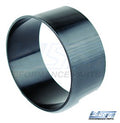
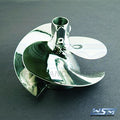
Yamaha WaveRunner Impeller Replacement: What You Need to Know
Share
In stock · ships direct from the warehouse
Get the right WaveRunner impeller for your year and model
Yamaha impellers are not interchangeable across platforms — a VX impeller will not fit an FX, and the SVHO twin-blade pumps take their own part. Pick your ski and we'll show only what actually fits it.
▸ Find My Impeller — Year / Make / Model
Or jump straight to the common ones:
| Fits (as listed by the manufacturer) | OEM-Style Stainless | SOLAS Performance |
|---|---|---|
| VX / 1100 05–15 | 021-110-12/18 — $204.70 | YH-CD-18/22 — $335.05 |
| EX / 1050 17–24 (SOLAS listing is EX-R 3-cyl 19–21) | 021-105-12/20 — $249.95 | YX-CD-12/17 — $335.05 |
| FX / 1800 08–23 | 021-120-13/19 — $241.45 | YS-CD-11/15 — $338.20 |
| GP1800R / FX SVHO / FZR / FZS 14–26 | 021-121-13/20 — $331.32 | YV-TP-12/18 (SVHO twin) — $786.66 |
| 1900 FX / GP / VX HO 24–26 | Use the finder | YS-CD-14/16 — $317.39 |
| SuperJet 700 06–20 | Use the finder | YH-CD-11/14 — $335.05 |
Year ranges above are the manufacturer's own fitment listing. If your ski sits on the edge of a range, or you're not sure which platform you have, run it through the Year / Make / Model finder or send us the model and year and we'll confirm it before you buy.
Yamaha WaveRunners are known for reliability, but the jet pump takes the same beating on any PWC regardless of brand. Impellers wear, get damaged by debris, and eventually need replacing. If you own a WaveRunner and are getting ready to replace yours, here's what's different about Yamaha's setup and what you need to know before you start.
How Yamaha's Jet Pump Differs from Sea-Doo
At a high level, all PWC jet pumps work the same way: a spinning impeller moves water through a housing, and thrust comes out the nozzle. But Yamaha and Sea-Doo differ in a few meaningful ways when it comes to pump service:
- Thread direction: Like Sea-Doo, Yamaha impellers use left-hand threads on most models — the impeller loosens clockwise and tightens counter-clockwise. Always confirm for your specific model before applying force.
- Impeller tool: Yamaha uses a different impeller removal tool than Sea-Doo. The tools are not interchangeable. Make sure you have the correct Yamaha-specific impeller wrench for your platform before starting.
- Pump access: Yamaha's pump design on many models allows slightly easier access to the impeller than some Sea-Doo configurations, though the overall process is similar.
- Shaft coupler design: Yamaha uses a different driveshaft-to-pump coupler design than BRP. Inspect the coupler for wear or cracking whenever the pump is off — it's a common wear item and cheap to replace while you're already in there.
Yamaha WaveRunner Model Guide: Which Impeller Do You Need?
Yamaha's lineup spans a wide horsepower range, and the correct impeller varies significantly between models. Here's a quick reference:
VX Series (110–125 hp)
The VX, VX Cruiser, and VX Deluxe are Yamaha's entry and mid-level models. These use a relatively compact pump designed for the 1.8L TR-1 engine. Impellers for this platform are widely available in both OEM-spec and SOLAS performance versions.
In stock for VX: Stainless Impeller 021-110-12/18 (Yamaha 1100 VX 05–15, $204.70) or the SOLAS YH-CD-18/22 ($335.05). Newer TR-1 VX models use a different part — check your year in the finder.
EX Series (100–110 hp)
The EX and EX Sport use a similar pump configuration to the VX but are tuned slightly differently. EX riders looking for better hole shot often opt for a lower-pitch SOLAS impeller, which makes a noticeable difference on this platform given its modest power output.
In stock for EX: Stainless Impeller 021-105-12/20 (Yamaha 1050 EX 17–24, $249.95). SOLAS YX-CD-12/17 ($335.05) is listed for the EX-R 3-cylinder 19–21 — confirm your exact model before ordering.
FX Series (180–250 hp)
The FX HO, FX Cruiser HO, FX SVHO, and FX Cruiser SVHO are Yamaha's flagship models. The SVHO variants are supercharged and have the most to gain from an impeller upgrade. The FX platform uses a larger pump than the VX/EX and requires the correct FX-specific impeller — do not mix up VX and FX impellers, they are not interchangeable.
In stock for FX: Stainless Impeller 021-120-13/19 (Yamaha 1800 08–23, $241.45) or SOLAS YS-CD-11/15 (Yamaha 1800 10–23, $338.20). SVHO twin-blade pumps take YV-TP-12/18 ($786.66) — a different part entirely.
GP1800R SVHO
Yamaha's performance flagship. The GP1800R uses the same supercharged 1.8L engine as the FX SVHO but in a lighter, sportier hull. This platform is one of the best SOLAS upgrade candidates in Yamaha's lineup — the power is there to take full advantage of a higher-pitch impeller, and top speed gains of 4–5 mph are commonly reported.
In stock for GP1800R: Stainless Impeller 021-121-13/20 (Yamaha 1800 GP / FX SVHO / FZR / FZS 14–26, $331.32) or SOLAS YV-TP-12/18 ($786.66).
SuperJet (100 hp)
Stand-up freestyle ski. The SuperJet uses a round-jet pump design that's quite different from the sit-down models. Impeller replacement is similar in concept but uses SuperJet-specific parts — don't confuse them with sit-down WaveRunner components.
In stock for SuperJet: SOLAS YH-CD-11/14 (Yamaha 700 Super Jet 06–20, $335.05). The 2021+ 1050 SuperJet is a different pump — ask us before ordering.
Signs Your WaveRunner Impeller Needs Replacing
The symptoms are the same regardless of brand:
- Loss of top speed or acceleration that wasn't there before
- Vibration at speed (usually caused by a chipped or unbalanced blade)
- A grinding, thumping, or rhythmic noise from the pump after a debris strike
- Visible blade damage when you shine a light into the pump nozzle
If your WaveRunner suddenly lost speed after riding in shallow water or near debris, suspect impeller damage before anything else. A quick visual inspection through the nozzle will often confirm it immediately.
Worth checking at the same time: if the impeller looks fine but you've still lost speed, the wear ring is the next suspect — see Loses Top Speed but Revs Fine? for the diagnosis (the logic is identical on a Yamaha).
Step-by-Step: Yamaha WaveRunner Impeller Replacement
The process mirrors our Sea-Doo guide closely. Here's the Yamaha-specific version:
- Remove the pump nozzle and steering nozzle. On most WaveRunners, the steering nozzle is held by a pivot pin and two bolts. Remove the reverse gate if equipped.
- Remove the ride plate and pump mounting bolts. The pump is secured to the hull at the intake grate area. Most WaveRunner models use 4–6 bolts here.
- Slide the pump off the driveshaft. It will pull straight back. Note the orientation of the pump coupler — this is a good time to inspect it for wear.
- Secure the pump and break loose the impeller. Use a Yamaha impeller tool to hold the shaft, then turn the impeller clockwise to loosen (left-hand threads). Be firm but controlled — these are often tight from heat cycles.
- Remove the impeller by hand. Wear gloves. Inspect it carefully — look at each blade edge for chips, erosion, or bends.
- Inspect the wear ring. Run your finger inside the housing. Grooves or scoring means it should be replaced at the same time.
- Install the new impeller with a thin coat of anti-seize on the threads. Thread on counter-clockwise by hand, then torque to spec with your impeller tool. Yamaha's torque spec varies by model — check your service manual.
- Reinstall the pump, nozzle, and ride plate in reverse order. Torque all fasteners to spec.
OEM vs. SOLAS for Yamaha: Which Should You Buy?
The same logic applies as with Sea-Doo. If you just need the ski running correctly again, a quality OEM-spec impeller does the job. If your model has the horsepower to take advantage of a pitch change — particularly the SVHO and GP1800R — a SOLAS upgrade is worth serious consideration. See our full breakdown: SOLAS vs. Stock Impeller: Is the Upgrade Worth It?
To find the correct SOLAS impeller for your specific WaveRunner year and model, use our SOLAS Impeller Finder, or browse all SOLAS impellers and OEM-style impellers we stock.
Torque Specs Quick Reference
Always confirm against your model's service manual, but as a general reference for common WaveRunner platforms:
- VX / EX Series: Impeller nut approximately 65–75 ft-lb
- FX Series: Impeller nut approximately 80–90 ft-lb
- GP1800R: Impeller nut approximately 80–90 ft-lb
These are general reference values only. Always confirm torque specs in your official Yamaha service manual before tightening.
Bottom Line
Replacing a Yamaha WaveRunner impeller is a legitimate DIY job with the right tools. Get the model-correct impeller tool, confirm the left-hand thread direction, use anti-seize not thread locker, and torque to spec. The whole job takes 1–2 hours once you've done it once.
Ready to order the part?
Every impeller above is in stock and ships direct. Not sure which one fits your ski? The finder filters by your exact year, make and model.
▸ Find My Impeller — Year / Make / Model
Prefer to talk it through? Contact us with your model and year and we'll confirm the right impeller before you buy.